Application requirements
Marine coated vinyl is specified by exposure, not by a family name. Supporting queries such as morbern prodigy marine vinyl, morbern allsport marine upholstery vinyl and morbern marine vinyl upholstery - freeport 54" describe buyer starting points. They do not prove that a quoted mill article matches those constructions. Record the vessel zone, contact with sunscreen or fuel, expected years in service, sewing method and whether the cover is stored wet.
End use and exposure
Open cockpit seating sees UV, salt and standing water. An enclosed helm wrap sees abrasion from clothing and different cold-flex needs. State whether the buyer needs four-way stretch, a 54 inch usable width or a specific topcoat gloss. Those choices change mill options more than a color name does.
Test method and sample state
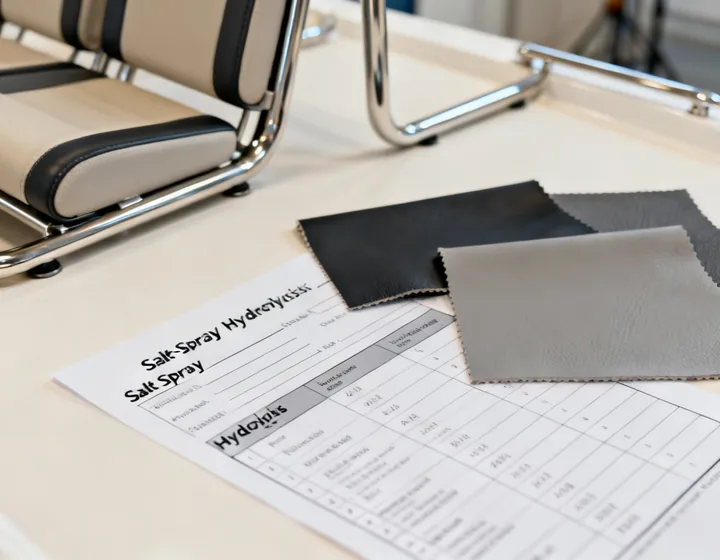
Ask which abrasion, hydrolysis, UV or cold-crack method applies, including edition and conditioning. A wet sample and a dry sample are not interchangeable. Bind every result to the proposed article rather than to a generic marine brochure.
Width, quantity and finish
Cover shops often buy by linear yard with a minimum shade lot. Confirm usable width after coating, roll length, defect mapping and whether foam lamination is included. Site constraints such as US destination, split deliveries and sample timing belong on the same brief.
Documents that should travel with a marine application brief include the retained swatch identity, any existing mill data sheet used only as a reference, the inspection sampling plan and packing rules for salt-air storage. Do not treat a named marine collection as authorized inventory. Alternatives remain item-by-item until samples and methods are accepted.
Stock program versus custom coating
A stock marine color can shorten sampling when fiber composition, knit or woven backing, GSM, usable width and topcoat already fit the zone. Custom coating can match hydrolysis, gloss and stretch, but it adds mill minimums, lab dips and a longer approval path. Neither route is automatically better; the brief must say which trade-off the buyer accepts.
Unit price versus delivered scope
A lower unit price can look attractive when two articles share the same usable width, weight, yield, packing, testing and inspection. When those items differ, the cheaper line often omits foam lamination, third-party tests or salt-air packing. Compare total delivered scope on one worksheet instead of ranking headline prices. Family brochures help discovery; they do not bind abrasion resistance, colorfastness or AQL to the quoted article.
Limits that stay on the marine brief: a dry abrasion result does not replace a wet hydrolysis result; a 54 inch family width is not the usable width after coating and trim; outdoor covers stored wet need a separate mildew and cold-flex check. SelvedgeMeadow Procurement does not publish a passing UV hour count because that value belongs to the mill method and lot.